Emerging Indian social media app Slick left an internal database containing users’ personal information, including data of school-going children, publicly exposed to the internet for months.
Since at least December 11, a database containing full names, mobile numbers, dates of birth, and profile pictures of Slick users was left online without a password.
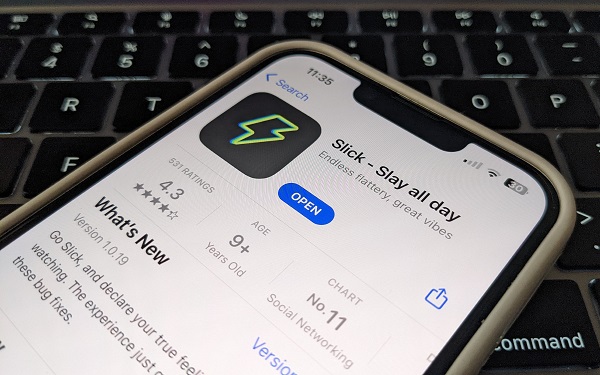
Bengaluru-based Slick launched in November 2022 by former Unacademy executive Archit Nanda after pivoting from crypto and closing his earlier startup CoinMint. His latest venture, Slick, is available on both Android and iOS and works similarly to Gas, a compliments-based app that is popular in the United States. The app also allows school and college students to talk with and about their friends anonymously.
Security researcher Anurag Sen from CloudDefense.ai found the exposed database, and asked TechCrunch for help in reporting the incident to the social media startup. Slick secured the database a short time after TechCrunch reached out on Friday.
Due to a misconfiguration, anyone familiar with the database’s IP address could access the database, which contained entries of over 153,000 users at the time it was secured. TechCrunch also found that the database could be accessed by an easy-to-guess subdomain on Slick’s main website.
The researcher also informed the India’s computer emergency response team, known as CERT-In, the country’s lead agency for handling cybersecurity issues.
Nanda confirmed to TechCrunch that Slick fixed the exposure. It’s not known if anyone other than Sen found the database before it was secured.
Slick attracted many younger users in India shortly after debuting last year. Earlier this month, Nanda took to Twitter to announce that the app crossed 100,000 downloads.
With lidar companies Ouster and Velodyne officially merged, CEO Angus Pacala has identified the next phase of growth. And it’s not self-driving cars or even advanced driver assistance systems. It’s smart infrastructure. “I keep saying this and people think I’m crazy, but there’s a good chance that smart infrastructure becomes our biggest vertical by a long shot […]
ate on Friday, Twitter announced a new policy that will remove text message two-factor authentication (2FA) from any account that won’t pay for it. In a blog post, Twitter said that it will only allow accounts that subscribe to its premium Twitter Blue feature to use text message-based 2FA. Twitter users that don’t switch to a different […]
zince its debut in November, ChatGPT has become the internet’s new favorite plaything. The AI-driven natural language processing tool rapidly amassed more than 1 million users, who have used the web-based chatbot for everything from generating wedding speeches and hip-hop lyrics to crafting academic essays and writing computer code. Not only have ChatGPT’s human-like abilities […]
Leave a Reply